古代纳西族有四个氏族部落:禾部落、梅部落、束部落和叶部落,又叫禾墩、梅墩、束墩和叶墩。有“禾、梅不离居,束、叶不分家”的说法。据传,禾、梅两个部落居住在金沙江东岸沿江峡谷,即现今的盐源、宁蒗等地;束、叶两个部落居住在金沙江西岸峡谷一带,即现今的丽江、维西等地。
In ancient times, the Naxi people consisted of four clans or tribes: the He, Mei, Shu, and Ye, also known as Hedun, Meidun, Shudun, and Yedun. There is a saying that “He and Mei never live apart, and Shu and Ye never separate.” Legend has it that the He and Mei tribes lived in the canyons along the eastern bank of the Jinsha River, in areas known today as Yanyuan and Ninglang; the Shu and Ye tribes lived in the canyon areas on the western bank, covering present-day Lijiang and Weixi.
禾、梅、束、叶四个部落的姓氏是怎样来的呢?相传,远在公鸡还在老林深处搭窝的时候,纳西族的血脉传到了猎人高楞趣这一代。高楞趣有四个聪明的儿子,老大叫趣若的,老二叫趣若吕,老三叫趣若斯,老四叫趣若鲁。
How did the surnames of these four tribes—He, Mei, Shu, and Ye—originate? It is said that long ago, when roosters still built their nests deep in the old forests, the Naxi lineage was carried by a hunter named Gao Lengqu. Gao Lengqu had four clever sons: the eldest, Qu Ruodi; the second, Qu Ruolü; the third, Qu Ruosi; and the youngest, Qu Ruolu.
高楞趣是个出色的猎手。雪山岔口上看得到他的影子,雪羊行走的陡壁上留着他的脚印,密林深处有他粗犷的呼喊声。他看一眼野兽走过的脚印,就能辨出是老虎还是豹子,是獐子还是麂子;他从野兽留下的粪便,也能判断出野兽什么时候路过这里,朝哪座大山走去了。他的判断准确得不差分毫。
Gao Lengqu was an exceptional hunter. His shadow could be seen at the passes of the snow mountains, his footprints remained on the steep cliffs where snow goats roamed, and his rugged shouts echoed from the depths of the dense forests. With a single glance at a beast’s tracks, he could tell if it was a tiger or a leopard, a musk deer or a muntjac. From the droppings left behind, he could judge exactly when an animal had passed by and toward which mountain it had headed. His judgment was unerringly accurate.
高楞趣埋下的地弩,从来没有虚发过;他挖掘的陷阱,能骗住狡猾的狐狸;他下的扣子,一次能扣住两只青鸡。九山十八寨都传扬着高楞趣的大名。一天,他挎着牛筋做弦的大弓,领着生有六个脚趾的猎狗,来到马、鹿经常出没的沟坎边安设地弩。
The ground crossbows Gao Lengqu set never missed their mark; the traps he dug could deceive the craftiest foxes; and the snares he laid could catch two pheasants at once. His fame spread across the nine mountains and eighteen villages. One day, carrying a large bow strung with ox sinew and accompanied by his six-toed hunting dog, he went to a gully frequented by horses and deer to set a crossbow.
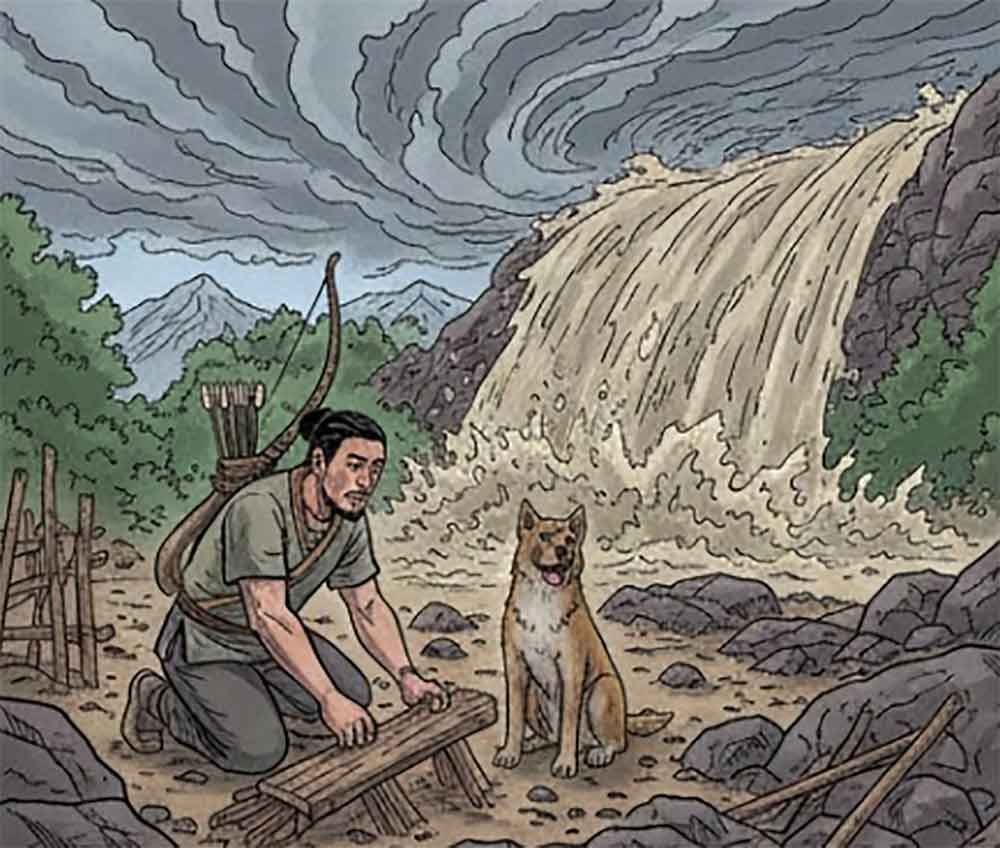
正当他支下地弩的时候,突然轰的一声,山洪暴发了。眨眼间滔天洪水涌满山谷,漫溢到山顶,冲塌了坡坎,高楞趣被埋到了坡坎下面。滚滚洪水淹没了村寨,高楞趣的四个儿子只好逃到大山里。
Just as he was setting the crossbow, there was a sudden roar as a mountain flash flood erupted. In the blink of an eye, the surging water filled the valley and reached the mountain peaks, causing the banks to collapse and burying Gao Lengqu beneath the debris. The rolling floodwaters submerged the village, forcing Gao Lengqu’s four sons to flee into the high mountains.
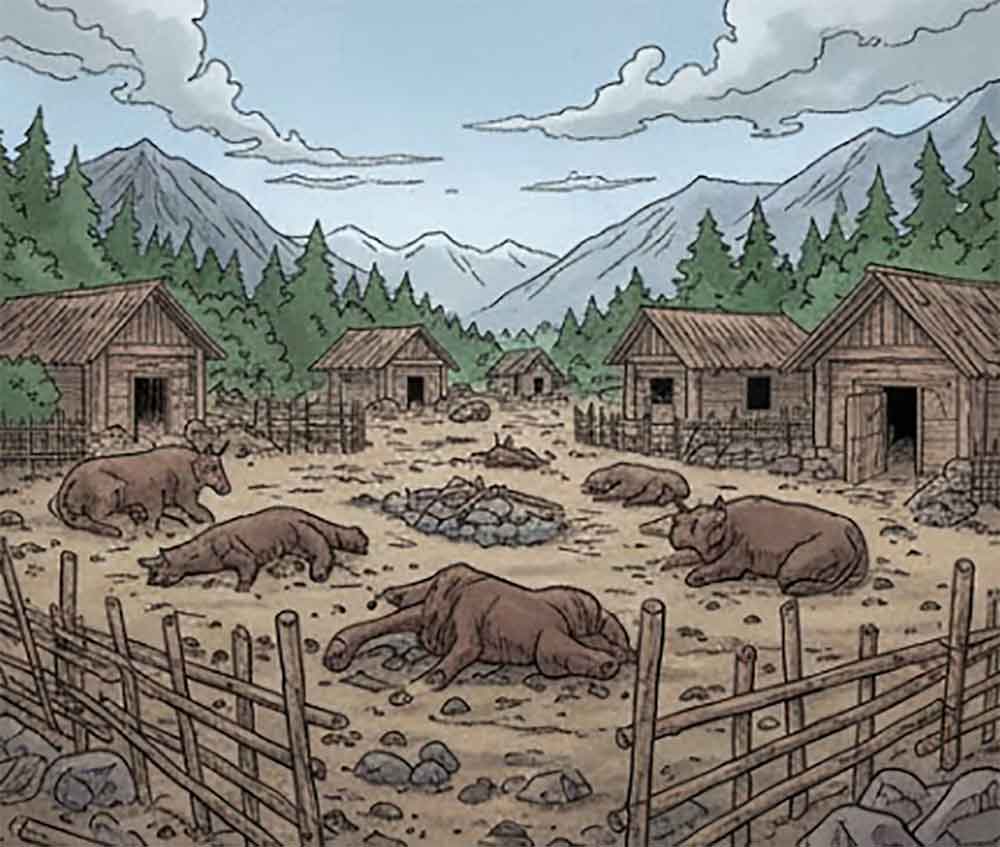
等到洪水退去,四个儿子回到家里,低矮的木楞房被冲塌了,牲畜和家禽全被淹死了,村寨里只留下枯树桩和石头,荒凉得像一片沙滩。四个儿子只得重新建造自己的家园。三年时光过去了。在辛苦和劳累中,高楞趣的四个儿子没有吃过一顿安逸饭,没有睡过一天安稳觉,没有坐下来谈过一次家常。
When the floods finally receded, the four sons returned home to find their low timber-framed houses collapsed and their livestock and poultry drowned. The village was left with nothing but dead stumps and stones, as desolate as a stretch of beach. The four sons had no choice but to rebuild their home from scratch. Three years passed. Through hard work and exhaustion, they did not eat a single meal in peace, sleep a single night in comfort, or sit down once to talk of family matters.
他们流下的汗水,浇出了幸福的硕果:木楞房梁上挂着百种野兽的干肉,牧场里散布着云朵样的牛群和羊群,奶汁像河水一样流淌,酥油和奶酪堆成山,生活像蜜蜂酿成的蜜一样甜。贫困的时候,四个儿子没有工夫寻找失散了的亲人,但是当富裕起来,四人又聚在一起时,他们就加倍思念失踪的老父亲。
The sweat they shed bore the fruits of happiness: hundreds of types of dried meat hung from the beams of their timber houses, herds of cattle and sheep like scattered clouds dotted the pastures, milk flowed like river water, and butter and cheese were piled like mountains. Life became as sweet as honey made by bees. In times of poverty, the four sons had no time to search for their lost kin, but once they became wealthy and gathered together, they missed their missing father all the more.
一天,四个儿子邀请村寨里的人到家里做客。当全寨人都环坐在火堆边吃肉喝酒的时候,一份坨坨肉多出来了,一碗斟满甜酒的酒碗也多出来了。是漏请了哪位客人,还是哪个人没有到?高楞趣的四个儿子从寨头算到寨尾,又从寨尾数到寨头,全寨子的人都在座了。
One day, the four sons invited the villagers to their home for a feast. While everyone sat around the fire eating meat and drinking wine, an extra serving of meat and an extra bowl filled with sweet wine remained. Had a guest been forgotten, or had someone failed to arrive? Gao Lengqu’s four sons counted from the head of the village to the end, and then back again; every person in the village was present.
当人们捧着酒碗,唱起祝酒歌的时候,高楞趣的四个儿子脸色变了。他们突然想起,这多出来的坨坨肉和酒碗,是自己父亲那一份。他们的泪水像断线的珍珠一般滴落在酒碗里。趣若的哽咽着说:“寻找(梅)阿爸的下落。”在纳西话中,“寻找”讲作“梅”,后来,“梅”就成了老大一支的姓氏。
As the people held their wine bowls and sang toasting songs, the faces of the four sons changed. They suddenly realized the extra meat and wine belonged to their father. Their tears fell into their wine bowls like broken pearls. Qu Ruodi choked out, “Go find (Mei) our father’s whereabouts.” In the Naxi language, “to search/find” is spoken as “Mei,” and thus “Mei” became the surname of the eldest son’s lineage.
趣若吕伤心地说:“我们想得太迟(禾)了!”“迟”在纳西话中讲作“禾”,后来,“禾”就成了趣若吕一支的姓氏。趣若斯难过地接着说:“恐怕阿爸的尸体都已经萎缩(束)了。”“萎缩”在纳西话中讲作“束”,后来,“束”就成了趣若斯一支的姓氏。
Qu Ruolü said sadly, “We thought of this too late (He)!” In the Naxi language, “late” is spoken as “He,” and thus “He” became the surname of Qu Ruolü’s lineage. Qu Ruosi added sorrowfully, “I fear father’s body has already shriveled (Shu).” In the Naxi language, “shrivel/wither” is spoken as “Shu,” and thus “Shu” became the surname of Qu Ruosi’s lineage.
趣若鲁焦急地抢过话头说:“可能阿爸的尸体已经腐烂(叶)了。”“腐烂”在纳西话中讲作“叶”,后来,“叶”就成了趣若鲁一支的姓氏。四个兄弟商议一番后,老大趣若的骑着一匹黑马去寻找阿爸高楞趣。一天,他在大山里默默地走着,一只金色的蜜蜂在他的耳边兜着圈子,他烦躁极了,抬起手撵蜜蜂,蜜蜂嗡地哼了一声,飞走了。趣若的没有找到阿爸,伤心地骑着黑马回来了。
Qu Ruolu anxiously interrupted, “Perhaps father’s body has already decayed (Ye).” In the Naxi language, “decayed/rotten” is spoken as “Ye,” and thus “Ye” became the surname of Qu Ruolu’s lineage. After discussing it, the eldest brother, Qu Ruodi, rode a black horse to find their father. One day, as he walked silently through the mountains, a golden bee circled his ear. Irritated, he raised his hand to shoo it away; the bee buzzed a hum and flew off. Qu Ruodi failed to find his father and returned home sadly on his black horse.
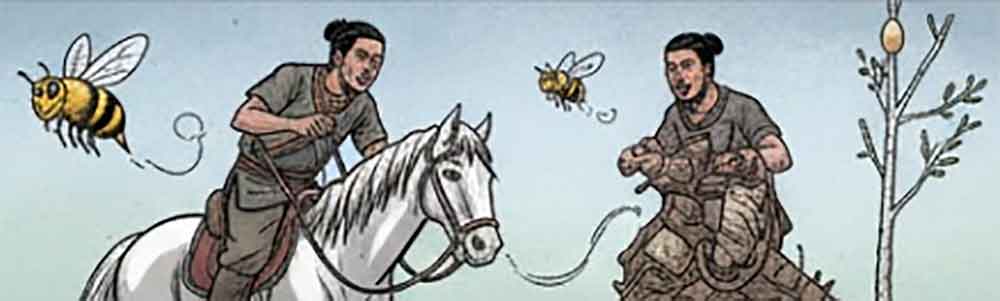
老二趣若吕也骑着一匹黑马去寻找阿爸。他一边走一边把手搭在嘴边,冲着密林呼喊了几百遍,大山响起了呜呜的回声。突然,一只金色的蜜蜂飞来,在趣若吕的耳边兜着圈子,弄得趣若吕也烦躁起来。他扬起马鞭赶蜜蜂,蜜蜂丢下一串哭声,又走了。趣若吕没有找着阿爸,伤心地骑着黑马回来了。
The second brother, Qu Ruolü, also rode a black horse to search for their father. As he went, he cupped his hands to his mouth and shouted into the dense forest hundreds of times, but only the echoing moans of the mountains answered. Suddenly, a golden bee flew by and circled his ear, making Qu Ruolü irritable as well. He raised his whip to drive the bee away; the bee left behind a trail of crying sounds and departed. Qu Ruolü did not find his father and returned sadly on his black horse.
老三趣若斯也骑着一匹黑马,捧着一碗祭食,出门去寻找阿爸。他默默地骑在马上,在一片幽静的山谷里走着。金色的蜜蜂又飞来绕着他不住地飞,他烦躁地摇晃着巴掌赶蜜蜂,蜜蜂呜呜地哭着飞走了。趣若斯也没有找着阿爸,只好骑着黑马回来了。
The third brother, Qu Ruosi, also rode a black horse, carrying a bowl of sacrificial food to search for their father. He rode silently through a quiet valley. The golden bee returned and flew incessantly around him. He waved his hand irritably to drive it off, and the bee flew away with a sobbing sound. Qu Ruosi also failed to find his father and had to return on his black horse.
老四趣若鲁骑着一匹雪白的骏马,也捧着一碗祭食,去寻找阿爸。他一边走一边冲着大山和老林悲伤地呼唤着,他的呼喊声在山间久久回荡。那只金色的蜜蜂又飞来了,在他的耳边悲鸣盘旋。趣若鲁心想:这只蜜蜂也许和阿爸有关。他捧着祭食,虔诚地说:“金子一样珍贵的蜜蜂,雪山一样尊贵的蜜蜂,你若是我阿爸的灵魂,请落在祭食上;若不是阿爸的灵魂,请你赶快飞走吧!”
The youngest, Qu Ruolu, rode a snow-white steed and also carried a bowl of sacrificial food. As he traveled, he called out sorrowfully to the mountains and forests, his voice echoing for a long time. The golden bee appeared again, mourning and circling his ear. Qu Ruolu thought, “Perhaps this bee is related to my father.” Holding the food, he said reverently, “Golden bee as precious as gold, noble bee as grand as the snow mountains, if you are my father’s soul, please land on this food; if not, please fly away quickly!”
趣若鲁的话刚说完,蜜蜂在他头顶上转了三圈,然后嗡的一声轻轻地落在了祭食上,瑟瑟地抖动着翅膀,仿佛是一位父亲在对儿子倾吐心里话。趣若鲁将一根白线拴在蜜蜂的腰上(据说,蜜蜂的腰就是被他勒细了的),然后蜜蜂又嗡的一声飞走了。趣若鲁骑着白马,紧紧跟随在蜜蜂的后面。
As soon as he finished speaking, the bee circled his head three times and then, with a buzz, landed gently on the sacrificial food. Its wings trembled slightly, as if a father were pouring out his heart to his son. Qu Ruolu tied a white thread around the bee’s waist (it is said this is why bees have thin waists) and then the bee buzzed and flew off. Qu Ruolu followed closely behind on his white horse.
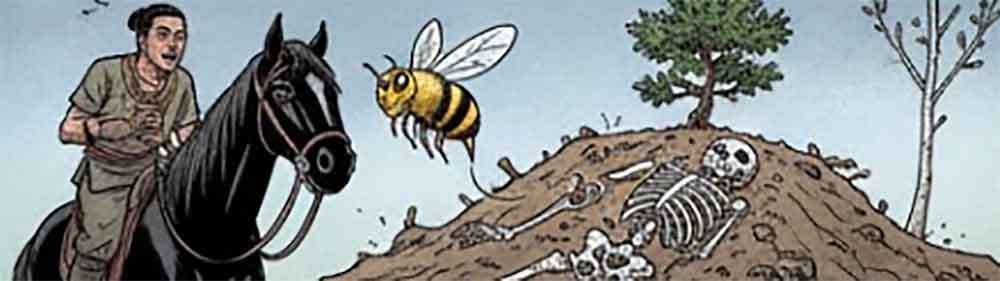
那只拴着白线的蜜蜂飞到一个塌坡的土堆上,飞了三圈,就隐没到土堆里去了。趣若鲁急忙骑着白马跑回家,把三个哥哥叫到一起,一同来到蜜蜂隐没的土堆前面。他们扒开土堆,终于找到了阿爸高楞趣的尸体。阿爸的脑壳上长着一棵刺柏树,手上长着一棵黄栗树,脚上长着一棵白桦树。
The bee with the white thread flew to a collapsed mound of earth, circled it three times, and disappeared into the dirt. Qu Ruolu hurriedly rode back home to gather his three brothers. Together they went to the mound and dug it open, finally finding the body of their father, Gao Lengqu. From his skull grew a juniper tree, from his hands grew a yellow chestnut tree, and from his feet grew a white birch tree.
从此以后,纳西族人遇到在耳边飞鸣的蜜蜂,就认为它是祖先的灵魂,不但不能伤害它,还要向它祈祷,请求祖先保佑。另外,祭天时,要在祭坛中央插一枝刺柏,两边各插一枝黄栗,前面插一枝白桦——顶着一个鸡蛋,表示天地和祖先。
From then on, whenever Naxi people encounter a buzzing bee near their ears, they believe it is the soul of an ancestor. Not only do they refuse to harm it, but they also pray to it for protection. Furthermore, during the “Sacrifice to Heaven,” a branch of juniper is placed in the center of the altar, with yellow chestnut branches on either side and a white birch branch in front—topped with an egg to represent heaven, earth, and the ancestors.
四兄弟流着伤心的泪水,给阿爸行了火葬礼,把他的灵魂送到祖先居住的地方。后来,他们分了家,老大趣若的迁到梅墩居住,成为梅氏部落的祖先。老二趣若吕迁到禾墩居住,成了禾氏部落的祖先。老三趣若斯迁到束墩居住,成为束氏部落的祖先。老四趣若鲁迁到叶墩居住,成为叶氏部落的祖先。他们的后裔像五月的青蒲一样,在金沙江峡谷两岸繁衍开来。
The four brothers, shedding sorrowful tears, held a cremation ceremony for their father and sent his soul to the dwelling place of the ancestors. Later, they divided the family: the eldest, Qu Ruodi, moved to Meidun and became the ancestor of the Mei tribe; Qu Ruolü moved to Hedun and became the ancestor of the He tribe; Qu Ruosi moved to Shudun and became the ancestor of the Shu tribe; and Qu Ruolu moved to Yedun and became the ancestor of the Ye tribe. Their descendants multiplied like green rushes in May along both banks of the Jinsha River.
Leave a Reply