Author: admin

  • Nüwa Mends the Heavens 女娲补天

    女娲创造人类之后,许多年来平安无事,人类一直过着快乐幸福的日子。
    After Nüwa created humankind, many peaceful years passed. Humans lived happily and contentedly, enjoying a life of joy and harmony.
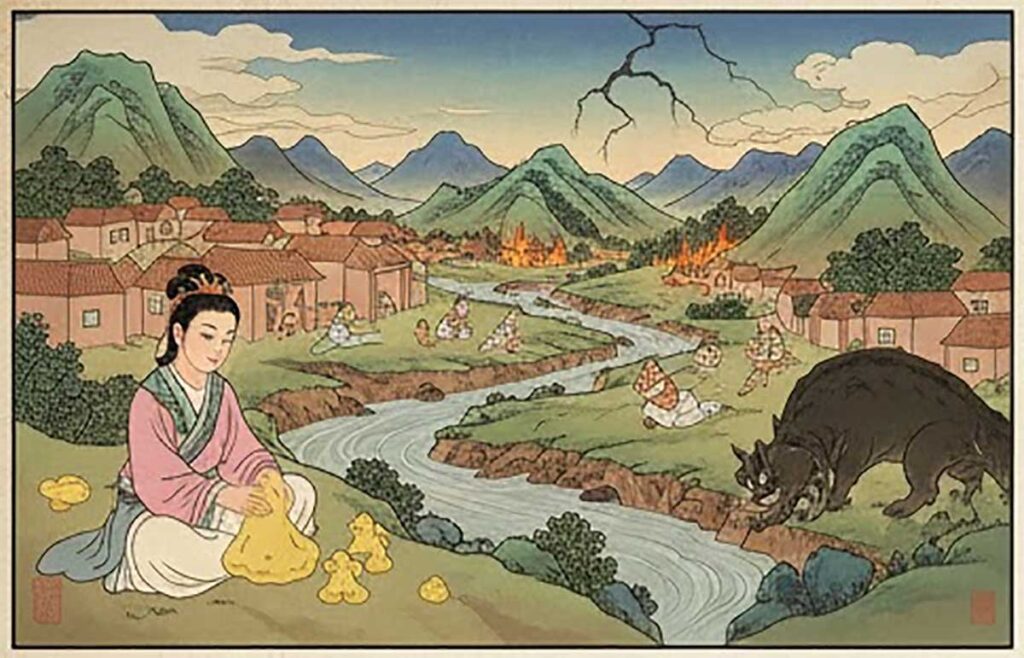

    不料有一年,不知道什么缘故,也许是神国出了大乱子,或者天地还不够牢固,宇宙间突然发生了一场大变动。
    Unexpectedly, one year—perhaps because turmoil broke out in the divine realm, or because heaven and earth were not yet stable—a tremendous upheaval suddenly occurred in the universe.


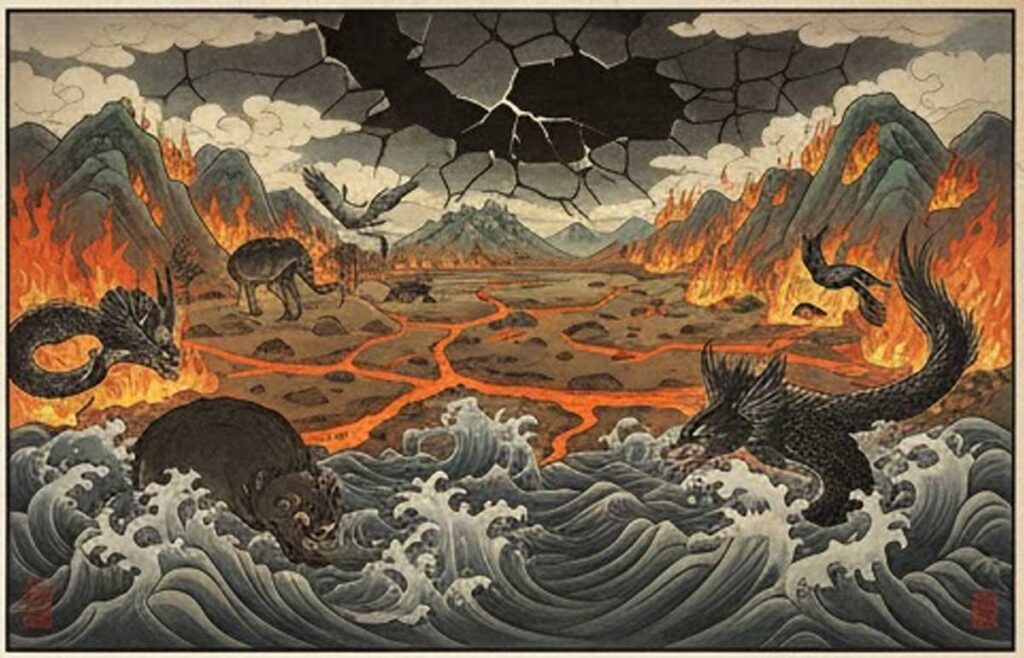
    半边天塌了下来,大地上也出现了横一道竖一道的黑黝黝的裂缝。
    Half the sky collapsed, and across the land appeared dark, crisscrossing裂缝 that split the earth open.


    在这场大变动中,山林燃起了熊熊大火,洪水从地底喷涌出来,波浪滔天,使大地成了海洋。
    During this catastrophe, forests burst into raging flames, floods surged up from beneath the ground, and towering waves turned the land into a vast sea.


    同时,人类还遭受到从山林大火中逃窜出来的各种恶禽猛兽的残害。
    At the same time, humans were attacked by vicious birds and ferocious beasts fleeing from the burning mountains.


    人类的处境十分艰难,他们已经无法生存下去。
    Humanity was pushed into desperate circumstances and could no longer survive on its own.


    女娲看见自己创造的人类遭遇如此可怕的大灾难,痛心极了。
    Seeing the terrible disaster that had befallen the humans she created, Nüwa was filled with deep sorrow.

    她来不及追究灾祸的起因,便亲自动手,勇敢地担负起拯救人类的重任。
    She had no time to investigate the cause of the calamity and instead took action herself, bravely shouldering the responsibility of saving humankind.


    她先在大江大河里选取许多五色石子,架起火堆,将石子熔化成胶状物。
    She first gathered many five-colored stones from great rivers, built a fire, and melted the stones into a molten, glue-like substance.


    她用这些胶状物把天上的一个个窟窿补好,远看几乎和原来的天空没有两样。
    With this molten material, she repaired the holes in the sky. From afar, the heavens looked nearly the same as before.


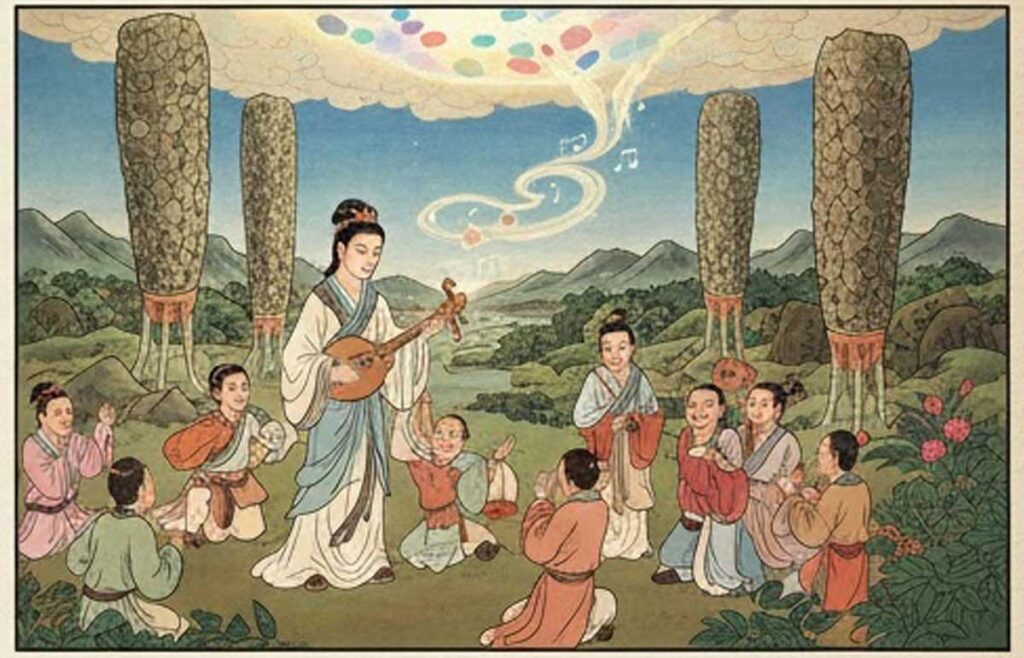
    她担心天空再次塌陷,便杀了一只大乌龟,砍下它的四条腿,当作擎天大柱。
    Fearing the sky might collapse again, she killed a giant turtle and cut off its four legs to serve as pillars holding up the heavens.


    她将这些柱子竖立在大地四方,把天空像帐篷一样牢牢撑起。
    She erected these pillars at the four corners of the earth, propping up the sky like a vast tent.


    从此,天空再也没有塌下来的危险了。
    From that moment on, the sky was no longer in danger of falling.


    那时,中原一带还有一条凶恶的黑龙,兴风作浪,危害人类。
    At that time, a vicious black dragon roamed the Central Plains, stirring storms and wreaking havoc on humanity.
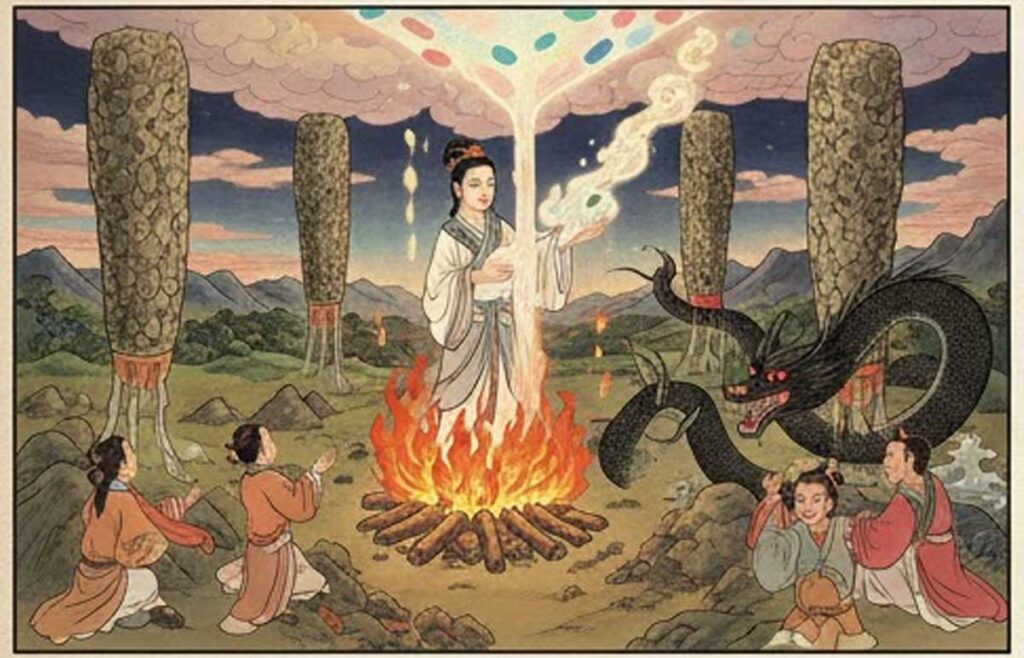

    女娲杀死了黑龙,又驱逐了各种恶禽猛兽,使人类免受残害。
    Nüwa slew the black dragon and drove away the ferocious beasts, freeing humans from their suffering.


    接着,她把河边的蘧草烧成灰,将灰堆积起来,挡住了滔天的洪水。
    Next, she burned reeds by the riverbanks into ashes and piled them up to block the raging floods.


    这场大灾祸终于被女娲平息,人类死里逃生,得到了拯救。
    At last, the great catastrophe was quelled by Nüwa, and humankind escaped death and was saved.


    此后,大地重新焕发生机,春夏秋冬依序更替,井然有序。
    Afterward, the earth regained vitality, and the four seasons—spring, summer, autumn, and winter—followed one another in perfect order.


    恶禽猛兽大多灭绝,幸存的也渐渐变得温顺。
    Most of the vicious beasts perished, and those that survived gradually became gentle.


    原野里长满天然的食物,人类只需付出少许劳动,便能衣食无忧。
    The plains were filled with natural food, and humans needed only a little effort to live free from hunger and worry.


    人类快乐地生活着,无忧无虑。
    Humankind lived happily, without fear or care.


    女娲见人类生活安稳,心中欣慰,又创造了一种名为“笙簧”的乐器。
    Seeing humans living in peace, Nüwa felt pleased and created a musical instrument called the shenghuang.


    这种乐器用葫芦制成,插有十三根管子,形如凤凰尾羽,能奏出清悦的乐声。
    Made from a gourd with thirteen pipes shaped like a phoenix’s tail feathers, the instrument produced clear and melodious sounds.


    她将它作为礼物赠予人类,从此人类的生活更加欢乐。
    She gifted it to humankind, and from then on, human life became even more joyful.

    女娲补好了天地,完成了一切能为人类做的事情,精疲力竭,不得不休息。
    After repairing heaven and earth and completing all she could for humanity, Nüwa was utterly exhausted and had to rest.


    所谓“休息”,也就是死亡,她像盘古一样化成了宇宙中的万物。
    This “rest” meant death; like Pangu, she transformed into many things within the universe.


    传说在大荒西方,有一片原野叫栗广之野,那里有十位神人,名为“女娲之肠”。
    Legend says that in the far western wilderness lies the Field of Liguang, where ten divine beings known as the “Intestines of Nüwa” dwell.


    他们是女娲肠子所化,横列成行,守护原野。
    They were formed from Nüwa’s intestines, lined up side by side to guard the land.


    另有一种说法认为女娲并未死,而是完成使命后乘雷车、驾飞龙升天。
    Another version of the legend claims that Nüwa did not die, but ascended to heaven in a thunder chariot drawn by flying dragons.


    在众神护送下,她登上九重天,朝见天帝,并汇报了自己的功绩。
    Escorted by gods and spirits, she rose to the Ninth Heaven, met the Heavenly Emperor, and reported her deeds.


    此后,她悄然居于天庭,从不夸耀自己的功劳。
    After that, she lived quietly in the heavenly court, never boasting of her achievements.


    她将一切归功于自然,只认为自己不过顺应天道,略尽绵薄之力。
    She attributed everything to nature, believing she had merely followed the natural order and offered only a small, humble effort.
  • Nvwa Creates Humans from Clay 女娲捏土造人

    天地开辟以后,天上有了太阳、月亮和星星,地上有了山川、草木,也有了鸟兽虫鱼,可是单单没有人类。

    After the world was formed, the sky had the sun, the moon, and the stars. The earth had mountains, rivers, plants, birds, beasts, insects, and fish—but there were no humans.


    这世间不免显得有些荒凉寂寞。不知什么时候,出现了一个神通广大的天神,叫作女娲。

    The world therefore felt desolate and lonely. At some unknown time, a powerful goddess appeared—her name was Nüwa.


    据说,她一天之中能够变化七十次。一天,女娲行走在草木丛生的原野上,看着周围的景象,感到非常孤独。

    It was said that she could transform herself seventy times in a single day. One day, while walking across a field full of plants, Nüwa looked around and felt deeply lonely.


    她觉得在天地之间,应该添一点什么东西,让世界变得生机勃勃起来。

    She thought that something should be added between heaven and earth to bring vitality and life to the world.


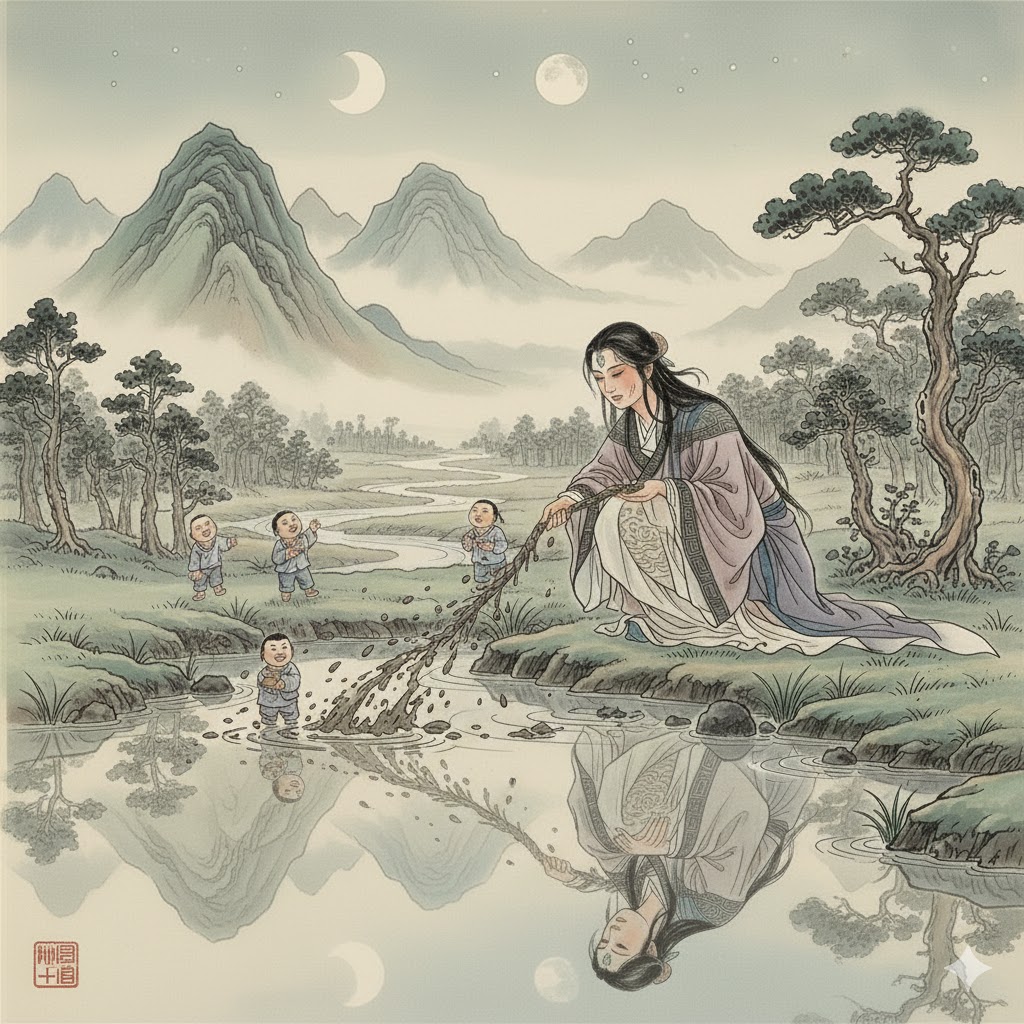
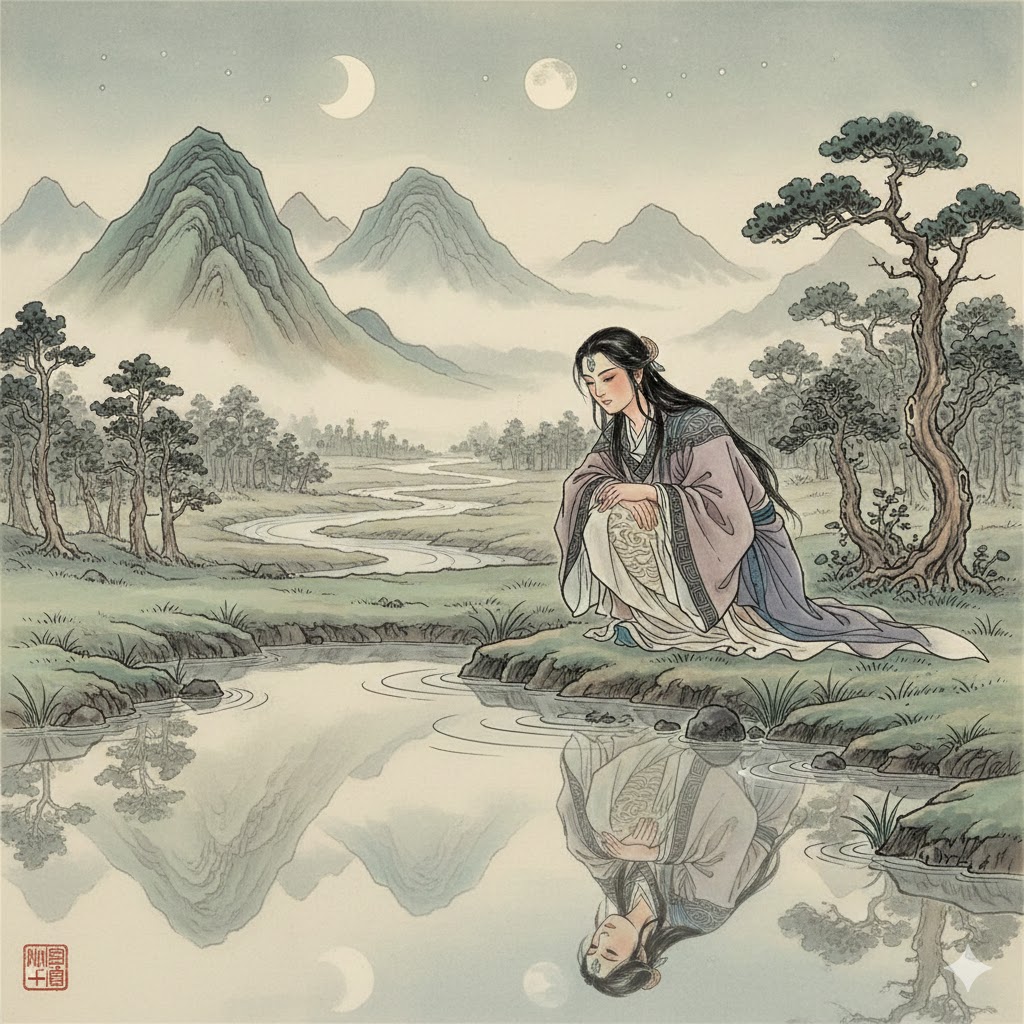
    走着走着,女娲有些疲倦了,便在一个池塘边蹲了下来。清澈的池水映出了她的面容和身影。

    As she walked on, Nüwa grew tired and squatted beside a pond. The clear water reflected her face and figure.


    她笑,水中的影子也笑;她假装生气,影子也随之生气。

    When she smiled, her reflection smiled back. When she pretended to be angry, the reflection also looked angry.


    女娲灵机一动:世间万物都有了,唯独没有像自己一样的生物,为什么不创造一种像自己的生命呢?

    Suddenly, an idea struck her: all kinds of creatures already existed, but none looked like herself. Why not create a being in her own image?


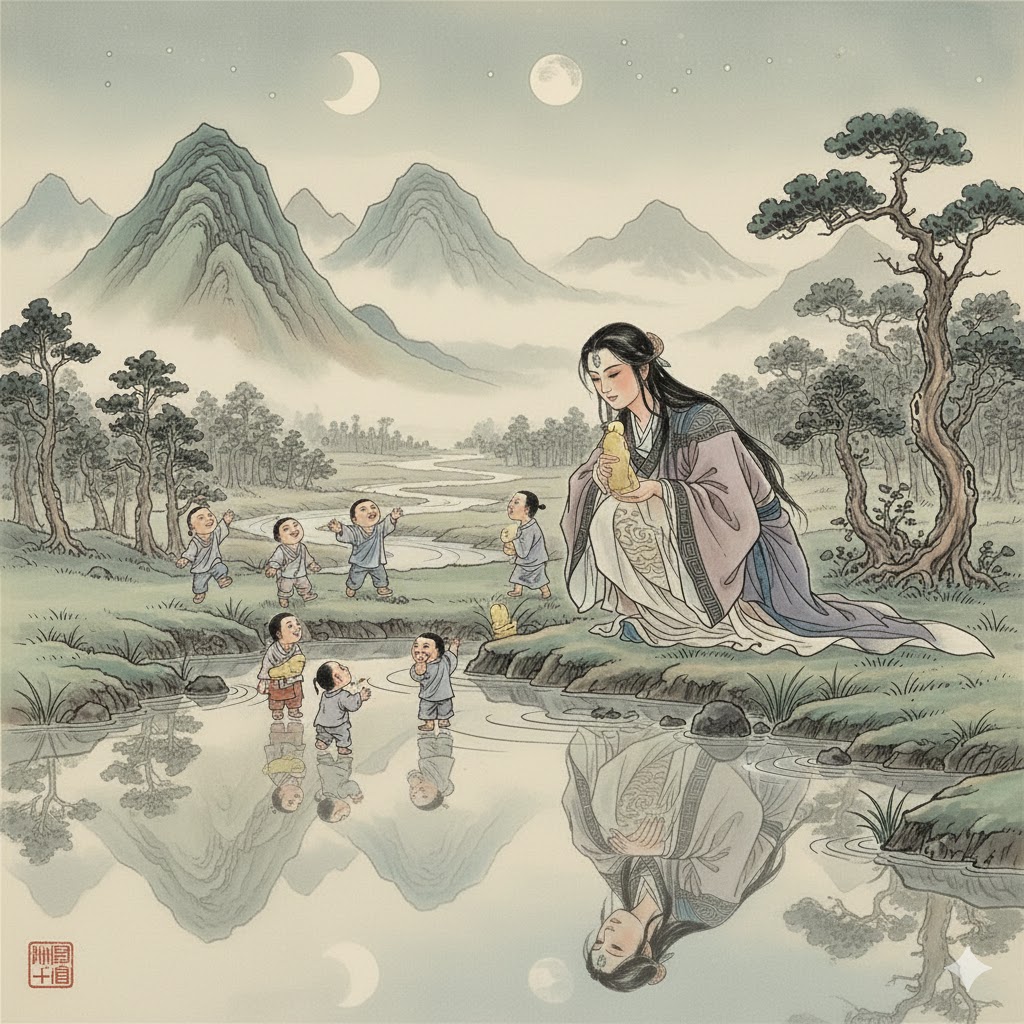
    想到这里,女娲从池塘边抓起一把黄泥,掺了水,照着自己的模样捏出了一个小泥娃娃。

    With this thought, Nüwa grabbed some yellow clay from the pond, mixed it with water, and shaped a small clay figure in her own likeness.


    奇怪的是,这个小泥娃娃一放到地上就活了,能四处走动。女娲非常满意,称它为“人”。

    Strangely, once the clay figure was placed on the ground, it came to life and began to walk. Nüwa was delighted and called it “human.”


    为了不让人类孤独,女娲继续用黄泥捏出了许多能说会走的小人儿。

    So that humans would not be lonely, Nüwa continued shaping many more small clay figures that could speak and walk.


    这些小人儿在她周围跳跃欢呼,使女娲感到高兴和安慰。从此,她不再感到孤独了。

    These little people danced and cheered around her, bringing her joy and comfort. From then on, she no longer felt lonely.


    女娲不停地工作,一直做到夜幕降临,星星和月亮在天空中闪烁。她靠在山崖上,稍作休息。

    Nüwa worked continuously until night fell and the stars and moon shone in the sky. She rested briefly against a cliff.


    第二天天刚亮,她又立刻起来继续创造。

    At dawn the next day, she rose at once and resumed her work.


    女娲想让这些有生命的小生物遍布大地,但大地太广阔了,她渐渐感到疲惫。

    She wished to fill the entire earth with living beings, but the land was vast, and she soon became exhausted.


    最后,她想出了一个更省力的方法。她拉下一根藤条,伸进泥潭里搅动泥浆,再向地面一挥。

    At last, she came up with a more efficient method. She pulled down a vine, dipped it into the mud, stirred it, and swung it toward the ground.


    泥点落下的地方,立刻出现了许多小人儿,和她之前捏出的泥人一模一样。

    Wherever the mud droplets fell, many small humans appeared, identical to the ones she had molded by hand.


    用这种方法造人,既简单又省力。不久,大地上布满了人类的身影。

    This method was quick and effortless. Before long, humans spread across the earth.


    虽然人类已经诞生,但女娲的工作还没有结束。

    Although humans now existed, Nüwa’s work was not yet complete.


    她想到,人终究会死亡,若每次都重新创造,未免太过麻烦。

    She realized that humans would eventually die, and recreating them each time would be too troublesome.


    于是,她把人分为男女,让他们彼此结合,繁衍后代,并自己承担养育子女的责任。

    So she divided humans into men and women, allowing them to unite, bear children, and take responsibility for raising future generations.


    从此,人类便世世代代繁衍生息,延续至今。

    From that time on, humanity multiplied generation after generation and has continued to this day.

  • Pangu Created The Heavens And The Earth 盘古开天辟地

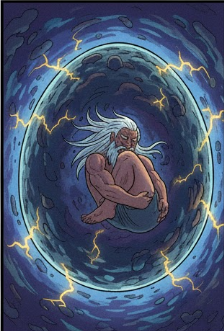
    很多很多年以前,当天和地还没有分开,宇宙只是黑暗混沌的一团,就像一颗巨大的蛋。盘古,这位巨人,就孕育在这黑暗混沌的大“鸡蛋”里。他成天在大“鸡蛋”里睡着,一睡就是一万八千年。

    Pangu created the heavens and the earth.

    Many, many years ago, when the sky and the earth were not yet separated, the universe was nothing but a dark and chaotic mass, like a giant egg. Pangu, the great being, was born inside this dark and chaotic “egg.” He slept in this egg for eighteen thousand years.

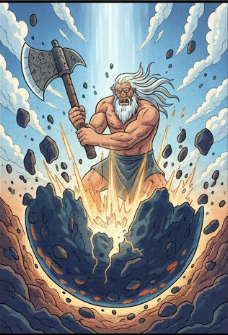
    有一天,盘古忽然醒了,他睁开眼睛一看,哎呀,什么也看不见,只是漆黑模糊的一片。盘古觉得这种状况非常令人烦恼,心里一生气,就从那里抓来一把大斧头,朝着眼前的黑暗混沌狠狠地用力一砍。

    One day, Pangu suddenly woke up. He opened his eyes and saw nothing but a dark, blurry space. Annoyed by this, Pangu, in a fit of anger, grabbed a great axe and struck the dark chaos with all his might.

    只听见一声巨响,大“鸡蛋”忽然破裂开来。轻而清的东西,缓缓上升,变成了天;重而浊的东西,慢慢下沉,变成了地。

    A loud sound echoed as the great “egg” suddenly cracked open. The light and pure elements slowly rose to become the sky, while the heavy and muddy elements sank to become the earth.

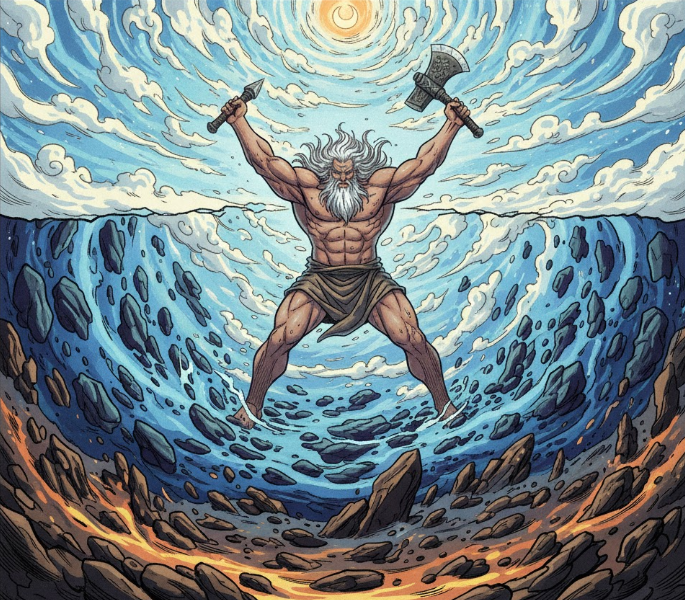
    最初,天和地当中还有些地方粘连不断,盘古又去找了一把凿子,左手执凿,右手拿斧,一边凿一边用斧头砍,辛勤地工作着,不久就把天和地完全分开了。

    At first, there were still places where the sky and the earth were connected. Pangu then took a chisel in his left hand and an axe in his right, working diligently by chiseling and chopping until the sky and the earth were completely separated.

    天和地分开以后,盘古怕它们还会合在一起,就站在天地之间,随着它们的变化而变化。天每天升高一丈,地每天加厚一丈,盘古的身子也随着它们的变化而增长。

    After the sky and earth were separated, Pangu stood between them, fearing that they might reunite. The sky rose a foot every day, the earth thickened a foot every day, and Pangu’s body grew in height to match these changes.

    盘古的身子究竟有多长呢?有人推算,说是有九万里。这个巨人,像一根巨大无比的长柱子似的,直挺挺地撑在天和地当中,不让它们有重归于混沌的机会。

    How long was Pangu’s body? Some estimate it to be ninety thousand miles long. This giant, like a massive pillar, stood firmly between the sky and the earth, preventing them from returning to chaos.

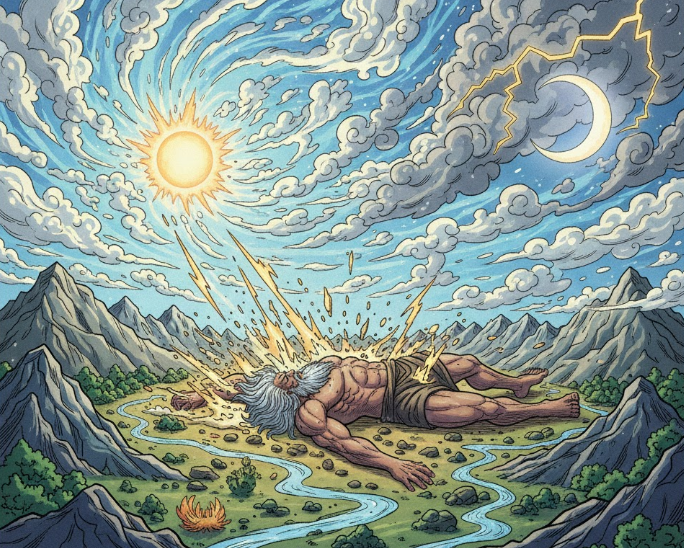
    终于,盘古因为长时间的辛劳,倒下了。临死的时候,他依然不忘开天辟地的工作。

    Finally, after years of hard labor, Pangu collapsed. As he died, he still did not forget his work of creating the heavens and the earth.

    他口里呼出的气变成了风和云;他的呼吸变成了雷声;他的眼睛变成了太阳和月亮;他的身体变成了大地的四极和五方的名山。

    His breath turned into wind and clouds; his sighs became the thunder; his eyes transformed into the sun and the moon; his body became the four corners of the earth and the famous mountains of the five directions.

    盘古为了让世界变得丰富而美丽,彻底地奉献了自己的一切。

    In order to make the world rich and beautiful, Pangu gave up everything of himself completely.