天地开辟以后,天上有了太阳、月亮和星星,地上有了山川、草木,也有了鸟兽虫鱼,可是单单没有人类。
After the world was formed, the sky had the sun, the moon, and the stars. The earth had mountains, rivers, plants, birds, beasts, insects, and fish—but there were no humans.
这世间不免显得有些荒凉寂寞。不知什么时候,出现了一个神通广大的天神,叫作女娲。
The world therefore felt desolate and lonely. At some unknown time, a powerful goddess appeared—her name was Nüwa.
据说,她一天之中能够变化七十次。一天,女娲行走在草木丛生的原野上,看着周围的景象,感到非常孤独。
It was said that she could transform herself seventy times in a single day. One day, while walking across a field full of plants, Nüwa looked around and felt deeply lonely.
她觉得在天地之间,应该添一点什么东西,让世界变得生机勃勃起来。
She thought that something should be added between heaven and earth to bring vitality and life to the world.
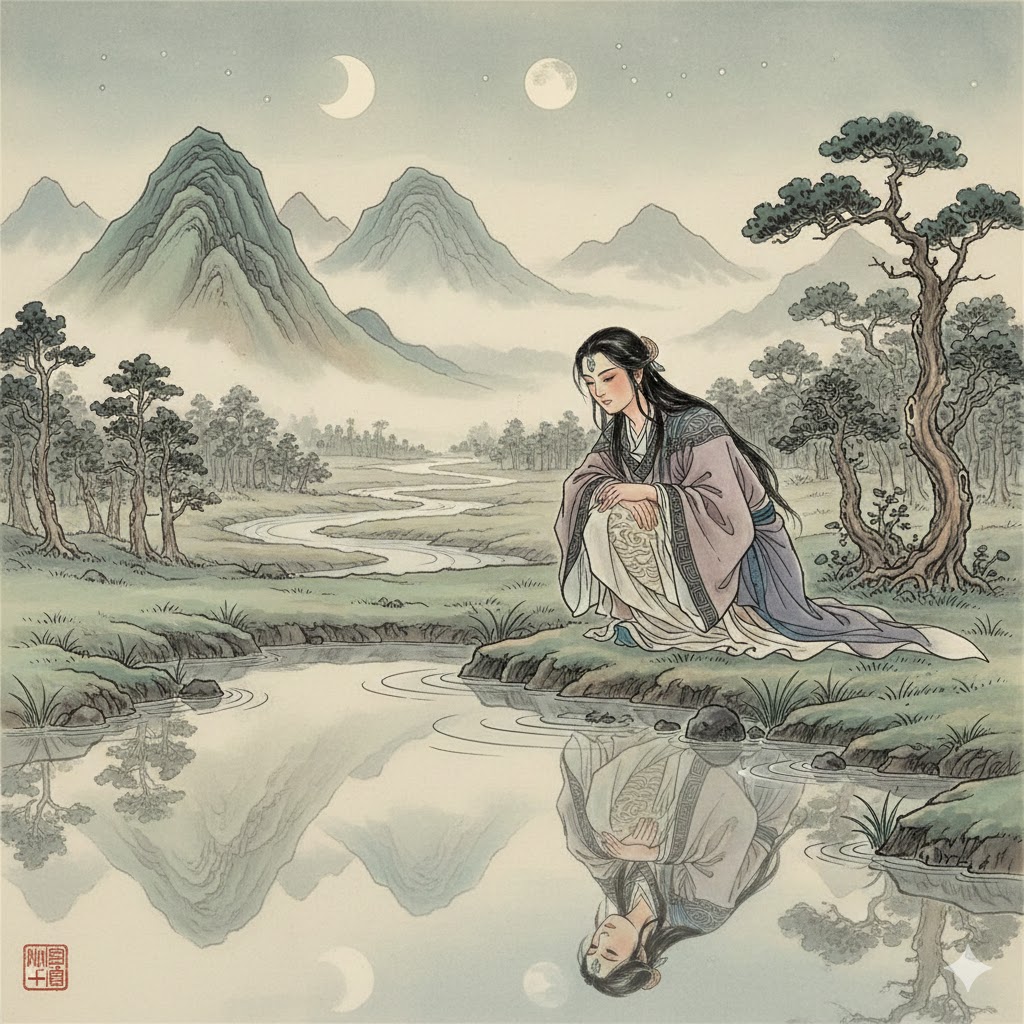
走着走着,女娲有些疲倦了,便在一个池塘边蹲了下来。清澈的池水映出了她的面容和身影。
As she walked on, Nüwa grew tired and squatted beside a pond. The clear water reflected her face and figure.
她笑,水中的影子也笑;她假装生气,影子也随之生气。
When she smiled, her reflection smiled back. When she pretended to be angry, the reflection also looked angry.
女娲灵机一动:世间万物都有了,唯独没有像自己一样的生物,为什么不创造一种像自己的生命呢?
Suddenly, an idea struck her: all kinds of creatures already existed, but none looked like herself. Why not create a being in her own image?
想到这里,女娲从池塘边抓起一把黄泥,掺了水,照着自己的模样捏出了一个小泥娃娃。
With this thought, Nüwa grabbed some yellow clay from the pond, mixed it with water, and shaped a small clay figure in her own likeness.
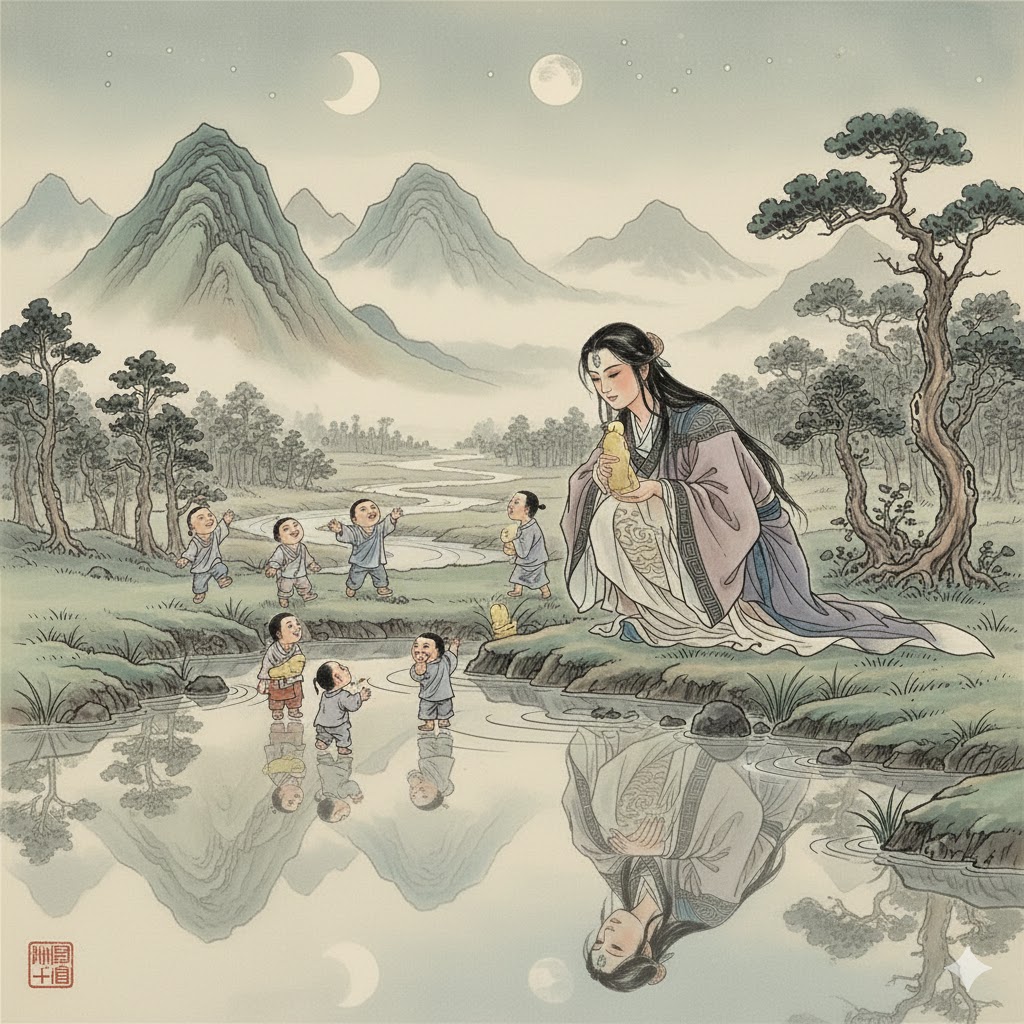
奇怪的是,这个小泥娃娃一放到地上就活了,能四处走动。女娲非常满意,称它为“人”。
Strangely, once the clay figure was placed on the ground, it came to life and began to walk. Nüwa was delighted and called it “human.”
为了不让人类孤独,女娲继续用黄泥捏出了许多能说会走的小人儿。
So that humans would not be lonely, Nüwa continued shaping many more small clay figures that could speak and walk.
这些小人儿在她周围跳跃欢呼,使女娲感到高兴和安慰。从此,她不再感到孤独了。
These little people danced and cheered around her, bringing her joy and comfort. From then on, she no longer felt lonely.
女娲不停地工作,一直做到夜幕降临,星星和月亮在天空中闪烁。她靠在山崖上,稍作休息。
Nüwa worked continuously until night fell and the stars and moon shone in the sky. She rested briefly against a cliff.
第二天天刚亮,她又立刻起来继续创造。
At dawn the next day, she rose at once and resumed her work.
女娲想让这些有生命的小生物遍布大地,但大地太广阔了,她渐渐感到疲惫。
She wished to fill the entire earth with living beings, but the land was vast, and she soon became exhausted.
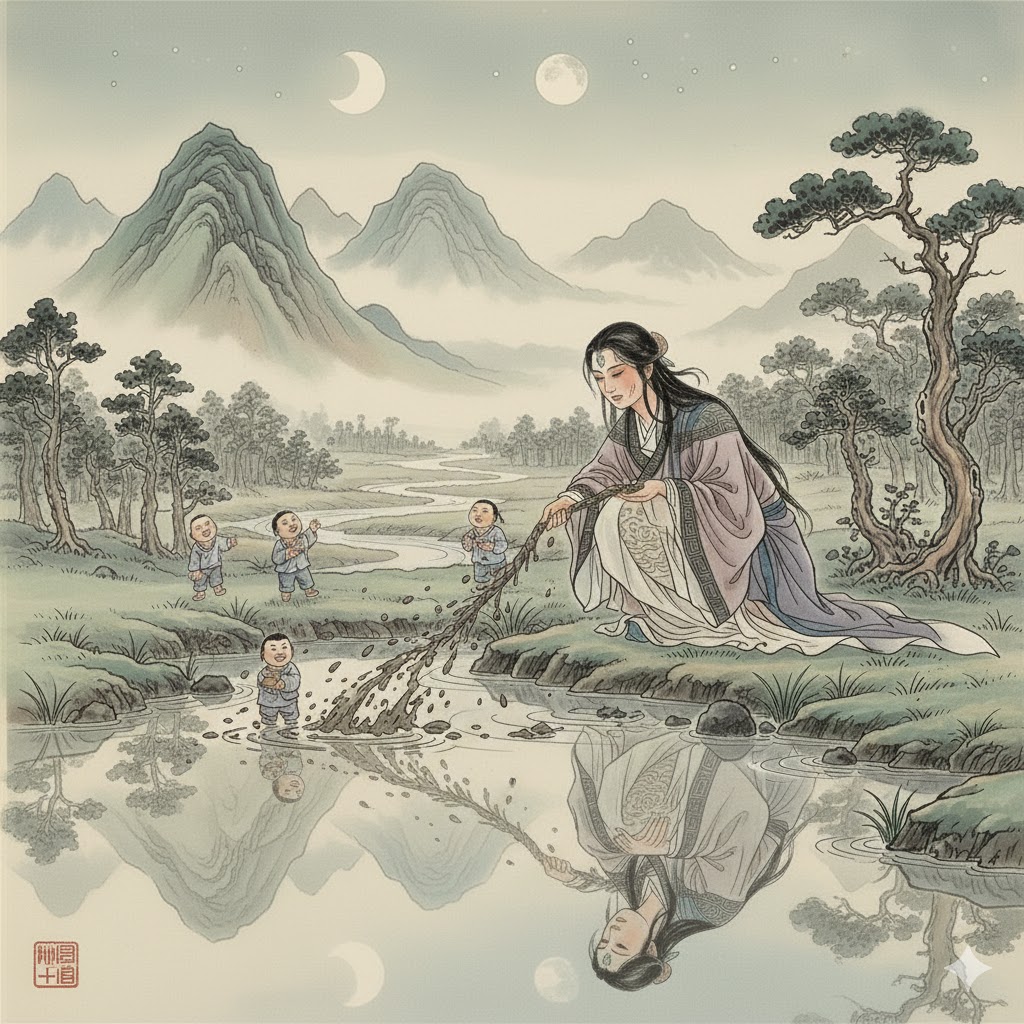
最后,她想出了一个更省力的方法。她拉下一根藤条,伸进泥潭里搅动泥浆,再向地面一挥。
At last, she came up with a more efficient method. She pulled down a vine, dipped it into the mud, stirred it, and swung it toward the ground.
泥点落下的地方,立刻出现了许多小人儿,和她之前捏出的泥人一模一样。
Wherever the mud droplets fell, many small humans appeared, identical to the ones she had molded by hand.
用这种方法造人,既简单又省力。不久,大地上布满了人类的身影。
This method was quick and effortless. Before long, humans spread across the earth.
虽然人类已经诞生,但女娲的工作还没有结束。
Although humans now existed, Nüwa’s work was not yet complete.
她想到,人终究会死亡,若每次都重新创造,未免太过麻烦。
She realized that humans would eventually die, and recreating them each time would be too troublesome.
于是,她把人分为男女,让他们彼此结合,繁衍后代,并自己承担养育子女的责任。
So she divided humans into men and women, allowing them to unite, bear children, and take responsibility for raising future generations.
从此,人类便世世代代繁衍生息,延续至今。
From that time on, humanity multiplied generation after generation and has continued to this day.
Leave a Reply